
San Juan Island Whale Watching FAQ’s
-
Can I eat and drink on the tour?
Yes! Western Explorer does not have food for purchase. If you do want to bring a snack, consider a granola bar or something similar as this boat moves at a high speed which may make eating a challenge. Beverages should be resealable.
-
Is there a restroom on the boat?
Yes, the Western Explorer II (3 hour tour) has a basic marine restroom. Please keep in mind that you will have gear on over your clothes to keep you warm, so it is usually best to plan restroom breaks before or after the tour. But it is available if needed.
-
What is the best month to see Orca Whales in the San Juan Islands?
Whales are found around the San Juan Islands (90 miles north of Seattle) throughout the year. Typically, the best time to see Orca Whales is between April and October, with the weather generally being nicer than the winter months. Check out our recent sightings here.
The San Juan Islands are one of the best places on earth to encounter Orcas Whales and you can expect to see them on the vast majority of our whale watching tours. We also regularly encounter beautiful Humpback Whales (through November) and Minke whales in the area. Our long range boat, experienced crew, and our departure location in Friday Harbor help ensure that our sightings are the highest they can be.
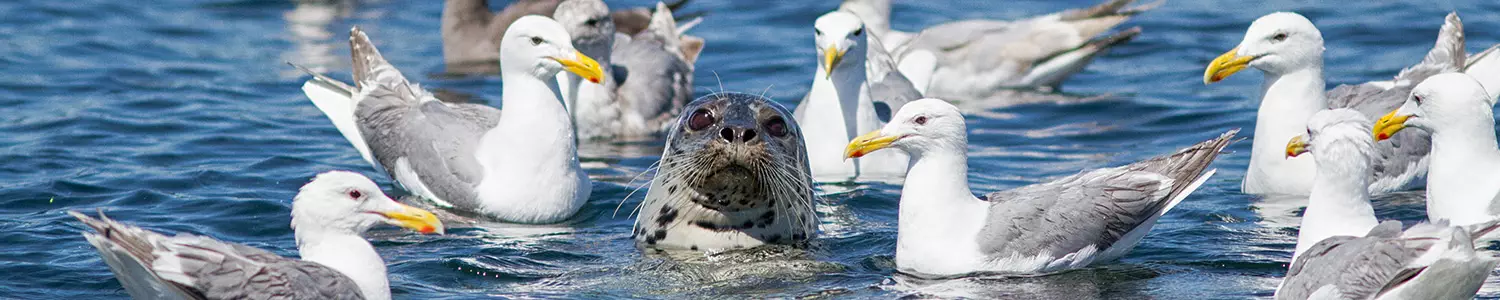
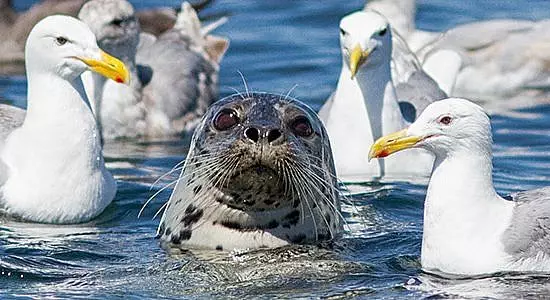
Also, keep in mind that the Orca Whales we see can travel completely out of the area, to the Pacific Ocean, from time to time and that every year is different depending upon what is happening in the ecosystem. Even the few tours that don’t include whales are worthwhile, with beautiful island scenery, Bald Eagles, Porpoises, Seals, Sea Lions, and lots of interesting Sea Birds.
-
Can I bring a camera on the boat?
Yes! However, there is always potential to get some salt water spray, especially when we are running at speed. If you have a dry bag, waterproof bag, or camera sleeve that is a great option. Many people have their camera around their neck, then tuck it into the cruiser suit while we travel.
-
What happens if we don’t see Whales? Do you guarantee?
Well, it doesn’t happen very often, but don’t panic if it does. Some of our best tours have been encounters with Porpoises, Harbor Seals, Bald Eagles, and Steller Sea Lions. Of course, we are always looking for whales, as well as other wildlife, during our trip and there are often times when we leave the dock without a whale report only to find some along the way. With the best crew around, we strive to make every tour the very best it can be and if there are whales in the area we will make every effort to share them with you. And, don’t forget that the beautiful island scenery alone is worth the price of the tour.
With that said, guest satisfaction is our primary goal. No one can control wildlife and weather. They are completely up to mother nature, and there are never any guarantees. However, in addition to all the other beautiful wildlife of the San Juan Islands, we want to give you every opportunity to experience the wonder of encountering and learning about whales in their natural environment. That is why, in the rare event that you don’t see whales (Orcas, Humpbacks, Minkes, Grays, etc.) on one of our public tours, you will receive a voucher for the value your party’s reservation. The voucher has no expiration. Just book again with your voucher code anytime in the future. This voucher is not transferrable, it may only be used by the original guests. This whale sighting policy does not apply on our heavily discounted private charters.
-
What is the best time of day for whale watching in the San Juan Islands?
Orca Whale sightings tend to be a bit better in the afternoon. However, overall whale sightings in the San Juan Islands are very similar from morning to afternoon, and whale behavior does not change based on the time of day. In our region, every day is a clean slate for sightings. Each morning we get out, working with all the other professional operators to spread out and search, covering as much water as possible to find the whales and wildlife that is in the area on that given day. So, while morning sightings are still excellent, we usually have more sightings coming in throughout the day and will oftentimes have a few more options by the afternoon tour. Also, our weather patterns here are different from the outer coast. We tend to have stable weather throughout the day, so winds are usually not a factor.
-
How close do you get to the whales?
There is always an urge to experience the whales and wildlife as close as possible. However, we have to remember that we are viewing these animals in their environment and it is best to see how they live without our interference. With this in mind we operate under guidelines and regulations that are in place to help ensure that we don’t change their behavior or interfere with their life cycles. Our guidelines change from year to year based upon the most recent scientific research. What you can expect is that we will not approach the Orcas (killer whales) within 200 yards in US waters and 200 meters in Canadian waters when we are viewing them. That distance is 100 yards/meters from Humpbacks, Minkes, and Grays. However, keep in mind that these distances on the water will still offer an excellent viewing experience when you are viewing such large animals.
-
What should we bring?
While the San Juan Islands have some of the best weather around in the Summer, we are still in the Pacific Northwest and you can always plan on it being about 15-20 degrees cooler out on the water. So, layered clothing is the key and remember you will be on a boat, so sensible shoes are best. Also, don’t forget to bring a camera (300 mm lens or bigger recommended for shooting wildlife), binoculars (we also have loaners available), sunglasses, and sunscreen. Most importantly though, bring a fun attitude! This will make your whale watching trip all the more enjoyable.
-
Is tipping customary?
Tipping, it is a bit of a hot topic these days and seems to be popping up in all kinds of unexpected places.
Firstly, we want to say that tipping your guides is not required. To tip, or not, is your prerogative. Regardless of your inclination, we strive to provide excellent service because we love what we do and we want you to have a wonderful experience. Of course, guiding is a service industry, and a gratuity is a great way to show your appreciation for your guide’s outstanding service.
So, if you feel like you received excellent service, and are inclined to tip, a gratuity of 5%-15% is fairly typical.
-
Will I get seasick?
It is very rare for people to get seasick on our boat. The Western Explorer II is very stable and the Salish Sea, where we operate, is relatively protected and is not subject to the large ocean swells one experiences out on the coast. However, some people are very susceptible to motion sickness. If you are one of those people you may want to take a non-drowsy (unless you want to pay for a nice long nap on the boat) motion sickness medication. We also have Sea Bands on board for guest use. Just ask the naturalist when you board.
-
Do I need to bring my passport?
You do not need to bring a passport along for your tour. We may pass through Canadian waters during our tour, but will not need to clear customs. It is, however, always a good idea to carry a valid ID with you.
-
Can I smoke or vape on the boat?
No, there is no smoking or vaping allowed on either vessel at any time.